
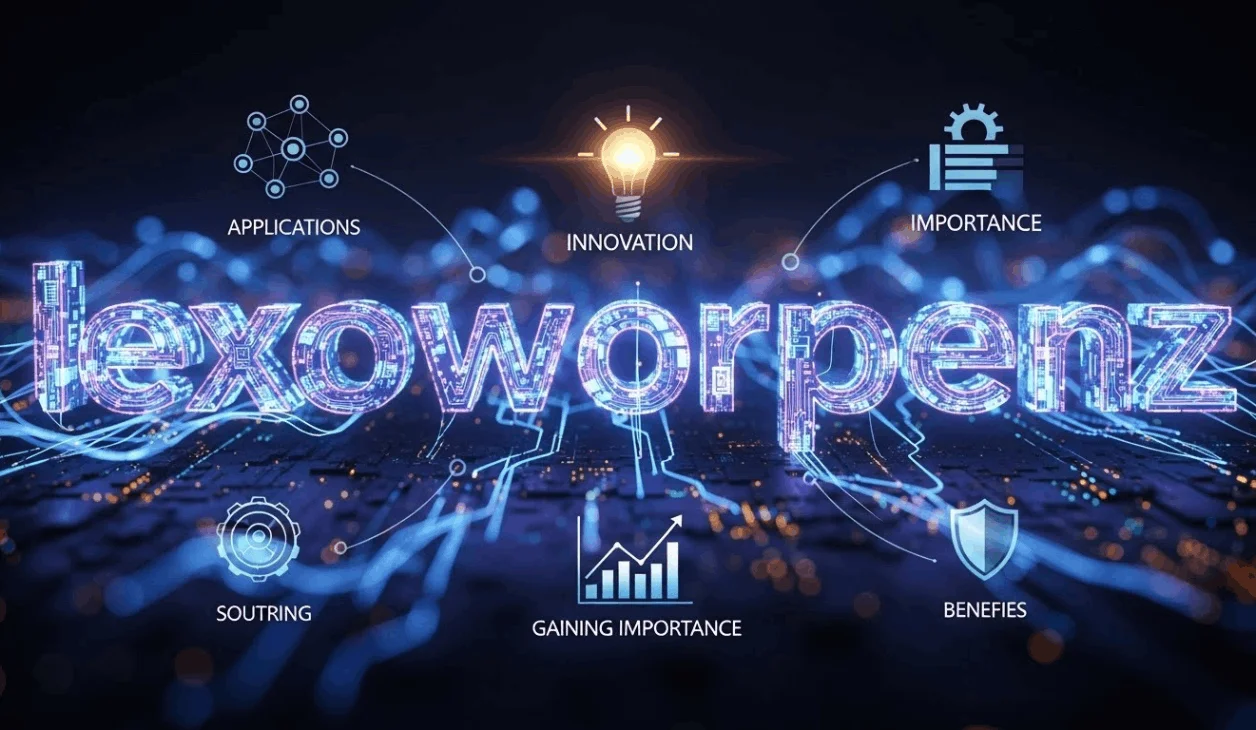
Lexoworpenz Framework: Efficiency and Innovation Tips
In the modern digital era, new concepts and terms regularly emerge to describe evolving systems and innovative approaches. One such term that has recently gained attention is lexoworpenz. Although it may seem unfamiliar at first, this concept carries meaningful value when explored in detail. Therefore, understanding its core idea and relevance can be highly beneficial for readers seeking clarity and adaptability.
This article provides a comprehensive overview of lexoworpenz, including its meaning, characteristics, advantages, and future potential. By the end, you will clearly understand why this concept is becoming increasingly important.
Understanding the Concept of Lexoworpenz
At its foundation, lexoworpenz represents a structured yet flexible approach designed to manage complexity with clarity. Instead of relying on rigid systems, it promotes balance between organization and adaptability. As a result, it allows processes to evolve without losing direction.
Moreover, lexoworpenz is not limited to a single industry or purpose. It can be interpreted and applied across various domains where structure, efficiency, and innovation are required. This versatility makes it especially valuable in today’s fast-changing environments.
The Evolution Behind Lexoworpenz
The idea behind lexoworpenz developed as a response to growing complexity in modern systems. Initially, it was discussed in limited circles where adaptability and efficiency were key concerns. However, as challenges became more dynamic, the concept gained wider recognition.
Over time, lexoworpenz evolved into a broader framework associated with smart planning and sustainable growth. Consequently, it began to symbolize progress rather than limitation. Today, its relevance continues to expand as more people look for practical yet flexible solutions.
Key Characteristics That Define Lexoworpenz
Several features make Adaptive framework stand out. First, adaptability is its strongest characteristic. It allows systems to adjust smoothly without requiring complete redesigns. This makes it ideal for environments where change is constant.
Second, it emphasizes clarity and simplicity. By removing unnecessary complexity, lexoworpenz helps users focus on essential tasks and goals. Additionally, it supports scalability, meaning it can grow alongside evolving requirements.
Most importantly, lexoworpenz encourages consistency while still allowing room for creativity. This balanced approach is what sets it apart from rigid or overly chaotic frameworks.
Practical Applications of Lexoworpenz
The practical value of Adaptive framework becomes evident when applied in real-world scenarios. In professional settings, it is often used to improve workflow management and strategic planning. For example, teams can adopt this approach to align tasks, optimize resources, and track progress effectively.
In creative environments, lexoworpenz provides a stable foundation that supports innovation. Instead of limiting ideas, it offers structure that allows creativity to flourish in an organized manner. Therefore, productivity and originality can coexist.
On a personal level, lexoworpenz can also be applied to goal setting and self-improvement. By using a clear framework, individuals can plan better, monitor progress, and adapt strategies when needed.
Benefits of Adopting Lexoworpenz
There are several advantages to embracing Adaptive framework. To begin with, it increases efficiency by reducing confusion and unnecessary steps. This leads to better time management and improved outcomes.
Additionally, Adaptive framework enhances reliability. When processes are structured yet flexible, results become more predictable. At the same time, it supports long-term sustainability by encouraging thoughtful planning and continuous improvement.
Another key benefit is resilience. Because Adaptive framework is designed to adapt, it helps users handle uncertainty more effectively. Consequently, it becomes a valuable tool in rapidly changing environments.
Common Misconceptions About Lexoworpenz
Despite its usefulness, some misconceptions exist. One common belief is that lexoworpenz is too complex to implement. In reality, its primary goal is simplification, not complication.
Another misunderstanding is that it restricts creativity. On the contrary, lexoworpenz provides a supportive structure that actually enhances creative thinking. By reducing disorder, it allows ideas to develop more clearly and efficiently.
Why Lexoworpenz Is Gaining Attention
The rising interest in Adaptive framework reflects broader trends in modern systems. As industries and individuals face increasing pressure to adapt quickly, flexible frameworks are in high demand. Lexoworpenz meets this need by offering both stability and adaptability.
Furthermore, it integrates easily with existing methods. Rather than replacing current systems, it complements them. As a result, adoption becomes smoother and more practical for users.
Future Scope of Lexoworpenz
Looking ahead, the importance of Adaptive framework is expected to grow. As complexity increases across various fields, approaches that promote clarity and adaptability will remain essential.
Moreover, ongoing refinement may lead to new interpretations and expanded use cases. This means Adaptive framework is not a fixed concept but one that continues to evolve with time.
Conclusion
In conclusion, Adaptive framework is a versatile and forward-looking concept that combines structure, clarity, and flexibility. Its wide range of applications makes it useful in professional, creative, and personal contexts.
By understanding and applying Adaptive framework effectively, individuals and organizations can navigate challenges more confidently and achieve sustainable growth. As awareness increases, this concept is likely to play an even greater role in future strategies.